
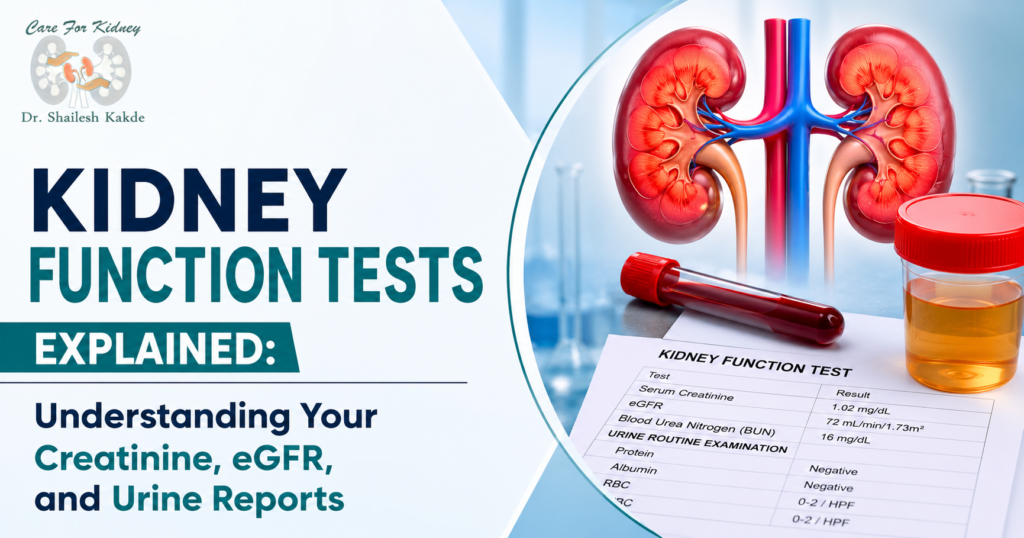
Kidney function tests can look confusing when you see terms such as creatinine, eGFR, albumin, protein, and urine creatinine on a laboratory report. However, these numbers provide important clues about how well your kidneys are filtering waste and whether there are early signs of kidney damage. Understanding them can help you discuss your health more confidently with a doctor or a Best Nephrologist in Baner Pune.
The kidneys work continuously to remove waste and excess fluid from the blood, regulate electrolytes, and help maintain overall balance in the body. Because kidney disease may develop without obvious symptoms in its early stages, blood and urine tests are often essential for detecting problems early. The National Institute of Diabetes and Digestive and Kidney Diseases (NIDDK) recommends assessing kidney function using measures such as GFR and urine albumin.
Why Are Kidney Function Tests Important?
Kidney disease does not always cause noticeable symptoms in its early stages. Someone can feel completely well while kidney function is gradually changing. Regular testing can help identify abnormalities before they become more serious.
Kidney function tests are particularly important for people with conditions that can affect the kidneys, such as diabetes, high blood pressure, heart disease, or a history of kidney problems.
Doctors may also recommend these tests when there are symptoms such as swelling, changes in urination, blood in the urine, persistent fatigue, or unexplained changes in blood pressure.
The results are not usually interpreted in isolation. A healthcare professional considers your age, medical history, medications, previous results, and other laboratory findings before deciding whether a result is concerning.
Understanding Creatinine: What Does It Tell You?
Creatinine is one of the most commonly discussed values in a kidney blood test.
Creatinine is a waste product produced naturally by muscle metabolism. Healthy kidneys filter creatinine from the blood and remove it through urine. When kidney filtration decreases, creatinine can accumulate in the bloodstream.
What does a high creatinine level mean?
A higher-than-expected creatinine level can indicate reduced kidney filtration, but it does not automatically mean that you have chronic kidney disease.
Creatinine can also be influenced by factors such as muscle mass, age, diet, dehydration, and certain medications. For this reason, doctors generally look at creatinine together with eGFR and other findings rather than relying on one number.
A sudden increase may sometimes indicate an acute problem, while a persistent abnormality may require investigation for chronic kidney disease.
This is why comparing your current result with previous results can be very useful.
What Is eGFR and Why Is It Important?
eGFR stands for estimated glomerular filtration rate. It estimates how effectively your kidneys are filtering blood.
Unlike creatinine alone, eGFR takes additional factors into account through an estimating equation. It is widely used as an important marker when assessing kidney function.
In general, an eGFR of 60 or higher may be considered within the expected range, while an eGFR below 60 may indicate reduced kidney function. An eGFR of 15 or lower is generally associated with kidney failure. However, one abnormal result does not automatically establish chronic kidney disease.
A simple guide to eGFR
The KDIGO 2024 guideline categorizes GFR into several ranges:
- G1: 90 or higher, normal or high
- G2: 60 to 89, mildly decreased
- G3a: 45 to 59, mildly to moderately decreased
- G3b: 30 to 44, moderately to severely decreased
- G4: 15 to 29, severely decreased
- G5: below 15, kidney failure
However, eGFR needs to be interpreted alongside evidence of kidney damage, particularly urine albumin.
It is also important to understand that eGFR is an estimate, not a direct measurement of kidney filtration. Certain situations can make the estimate less accurate, which is why doctors may sometimes request additional testing.
What Does Your Urine Report Tell You?
Blood tests provide information about filtration, but urine tests can reveal whether the kidneys are allowing substances into urine that should normally remain in the bloodstream.
A routine urinalysis may check for blood, protein, glucose, bacteria, pus cells, and other abnormalities. The National Kidney Foundation notes that urine testing can provide information about several possible kidney and urinary tract problems.
One particularly important test is the urine albumin-to-creatinine ratio, commonly called UACR.
Understanding Urine Albumin and UACR
Albumin is a protein normally found in the blood. Healthy kidneys generally prevent significant amounts of albumin from passing into urine.
When kidney filters are damaged, albumin can leak into the urine. This is called albuminuria.
The UACR compares the amount of albumin with creatinine in a urine sample. According to NIDDK and the National Kidney Foundation, a UACR below 30 mg/g is generally considered normal, while 30 mg/g or higher can indicate increased albumin in the urine.
KDIGO classifies albuminuria into three categories:
- A1: less than 30 mg/g, normal to mildly increased
- A2: 30 to 299 mg/g, moderately increased
- A3: 300 mg/g or higher, severely increased
Higher albumin levels can indicate greater kidney damage and may increase the risk of kidney disease progression.
What About Protein in the Urine?
Protein in urine is another finding that deserves attention.
A small amount may occasionally appear because of temporary factors, but persistent proteinuria can be associated with kidney damage. Depending on the situation, your doctor may recommend a UACR, urine protein-to-creatinine ratio, or other investigations.
The National Kidney Foundation notes that a urine protein-to-creatinine ratio can measure proteins other than albumin and may be useful in certain kidney conditions.
Therefore, if your urine report says “protein positive,” it is important not to panic, but it is also important not to ignore the result.
Can One Abnormal Test Confirm Kidney Disease?
Not necessarily.
Kidney function can temporarily change because of dehydration, illness, certain medications, infections, or other factors. A single abnormal creatinine, eGFR, or urine result may therefore need to be repeated or investigated further.
Chronic kidney disease is generally assessed using persistent abnormalities over time or other evidence of kidney damage. KDIGO defines CKD based on abnormalities of kidney structure or function that are present for at least three months.
Your doctor may therefore focus on trends rather than one isolated number.
For example, a stable eGFR over several tests may tell a different story from an eGFR that is steadily declining.
When Should You See a Kidney Specialist Doctor?
Consider discussing your results with a Kidney Specialist Doctor if you have repeated abnormal kidney tests, persistent protein or albumin in your urine, a significant decline in eGFR, blood in the urine, uncontrolled blood pressure, diabetes with kidney-related abnormalities, or a known history of kidney disease.
Early assessment can be valuable because kidney problems may be easier to manage when detected before substantial loss of kidney function occurs.
Do not try to interpret your report based only on whether a number is marked “high” or “low.” Laboratory reference ranges can vary, and the clinical meaning depends on the complete picture.
How Kidney Function Is Monitored Over Time
If you already have kidney disease, monitoring may include repeated blood and urine tests. Your doctor may track:
- Serum creatinine and eGFR
- Urine albumin or UACR
- Blood pressure and blood sugar
- Electrolytes and other blood markers when appropriate
The purpose is not simply to collect numbers. Monitoring helps doctors understand whether kidney function is stable, improving, or changing and whether treatment needs adjustment. NIDDK notes that stable GFR and unchanged or decreasing urine albumin can be signs that treatment is working.
Take Your Kidney Reports Seriously, But Do Not Panic
Seeing an abnormal kidney test can understandably be worrying. However, a single number rarely tells the whole story.
Creatinine helps assess waste removal, eGFR estimates filtration, and urine tests can identify signs such as albumin or protein leakage. Together, these results provide a much clearer picture of kidney health.
If your results are abnormal, the most useful next step is to discuss them with a qualified medical professional rather than trying to diagnose yourself from the report.
Consult Dr. Shailesh Kakde for Kidney Care
If you have concerns about creatinine, eGFR, urine protein, albuminuria, or other kidney-related test results, Dr. Shailesh Kakde can help evaluate your reports in the context of your overall health. Appropriate assessment and regular monitoring can help identify kidney problems early and support timely management.
For patients looking for a Kidney Specialist Doctor in Pune, consulting a qualified kidney specialist can help you understand what your reports actually mean and what steps may be appropriate for your individual situation.
Hashtags
#KidneyHealth #KidneyFunctionTest #Creatinine #eGFR #KidneyDisease #Nephrology #KidneyCare #HealthyKidneys #KidneySpecialist #HealthAwareness